Description du produit
Description du produit
Here is our advantages when compare to similar products from China:
Post Hole Digger Auger Boxes. Gearboxes especially designed for use on grain augersThis selection of gearboxes, are designed specifically for use on grain handling augers. But can be used in other situations.Boxes from the general purpose section may also suit some applications.Size for examples for items please send us inquire!
Product Specifications
| ITEM | HN-01-725 |
| Ratio | 3.18:1 |
| Teeth | 11/35 |
| Module | 5.08 |
| Power | 40 |
| Rated Input | 540rpm |
| Input/Output Description | Optic axis |
| Weight(N.W) | 28Kg |
Emballage et expédition
Equipment
Company Profile
HangZhou Hanon Technology Co.,ltd is a modern enterprise specilizing in the development,production,sales and services of Agricultural Parts like PTO shaft and Gearboxes and Hydraulic parts like Cylinder , Valve ,Gearpump and motor etc..
We adhere to the principle of ” High Quality, Customers’Satisfaction”, using advanced technology and equipments to ensure all the technical standards of transmission .We follow the principle of people first , trying our best to set up a pleasant surroundings and platform of performance for each employee. So everyone can be self-consciously active to join Hanon Machinery.
FAQ
1.WHAT’S THE PAYMENT TERM?
When we quote for you,we will confirm with you the way of transaction,FOB,CIFetc.<br> For mass production goods, you need to pay 30% deposit before producing and70% balance against copy of documents.The most common way is by T/T.
2.HOW TO DELIVER THE GOODS TO US?
Usually we will ship the goods to you by sea.
3.How long is your delivery time and shipment?
30-45days
| Taper: | Pit Digger |
|---|---|
| Usage: | Agricultural Machinery |
| Matériel: | 20 Crmnti |
| Poids: | 22-49kg |
| Service après-vente : | Online Support |
| Garantie: | 1 an |
| Exemples : |
US$ 30/Piece
1 pièce (commande minimale) | |
|---|
| Personnalisation : |
Disponible
| Demande personnalisée |
|---|
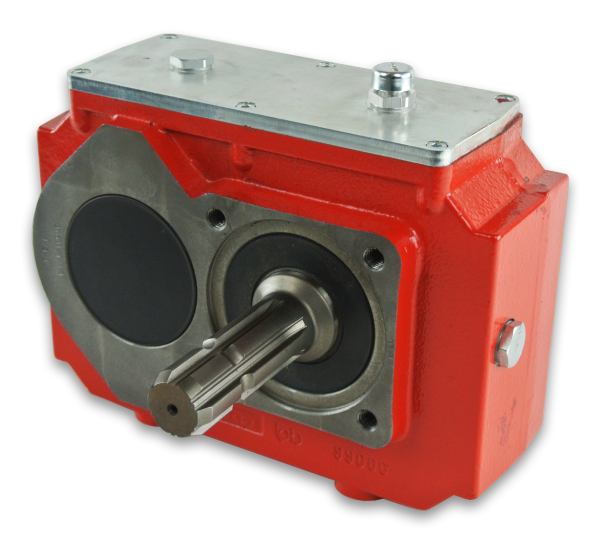
Difficultés liées à l'utilisation des boîtes de vitesses à engrenages coniques
Bien que les réducteurs à onglets offrent divers avantages, ils présentent également certains défis qu'il convient de relever :
Lubrification: Une lubrification adéquate est essentielle au bon fonctionnement des réducteurs d'engrenages à onglets afin de minimiser la friction, la chaleur et l'usure entre les dents. Assurer une lubrification constante et suffisante dans le réducteur peut s'avérer complexe, notamment dans les espaces confinés ou difficiles d'accès.
Entretien: Les réducteurs d'onglet nécessitent un entretien périodique pour garantir leur fonctionnement optimal et leur longévité. Cet entretien peut comprendre la vérification et le remplissage du lubrifiant, l'inspection de l'usure des dents d'engrenage et la correction de tout problème d'alignement ou de montage pouvant survenir au fil du temps.
Contrecoup: Le jeu, ou espace entre les dents d'un engrenage, peut affecter la précision de la transmission du mouvement. Un jeu excessif peut entraîner une perte de précision et des erreurs de positionnement dans les applications exigeant une grande exactitude.
Conception complexe : Les réducteurs à onglets présentent une conception plus complexe que d'autres types de réducteurs, ce qui peut rendre leur fabrication, leur assemblage et leur maintenance plus difficiles. Cette complexité peut également engendrer des coûts de fabrication et de maintenance plus élevés.
Perte d'efficacité : Les réducteurs à engrenages coniques peuvent subir des pertes d'efficacité dues à des facteurs tels que le frottement et le défaut d'alignement. Ces pertes peuvent réduire le rendement global de la transmission de puissance, entraînant un gaspillage d'énergie.
Contraintes d'espace : Dans certaines applications, les contraintes d'espace peuvent constituer un défi lors de l'intégration de réducteurs à onglet, notamment lorsque des rapports de transmission plus importants sont nécessaires pour obtenir le changement de direction de mouvement souhaité.
Charges de choc : Les applications soumises à des chocs soudains ou à des forces d'impact importantes peuvent poser des problèmes aux réducteurs à onglets. Des mesures adéquates, telles que l'utilisation de composants amortisseurs ou une conception renforcée pour une durabilité accrue, peuvent s'avérer nécessaires pour y remédier.
Alignement et montage : Un alignement et un montage corrects des réducteurs d'angle sont essentiels pour garantir un fonctionnement optimal et prévenir une usure prématurée. Obtenir un alignement précis peut s'avérer complexe, notamment dans les installations à accès limité ou aux géométries complexes.
Considérations relatives aux coûts : La complexité de conception et les exigences de fabrication des réducteurs à onglets peuvent engendrer des coûts plus élevés que pour les réducteurs plus simples. Il est donc essentiel, lors du choix d'un réducteur à onglets, de bien évaluer les avantages et les coûts associés.
Relever ces défis exige souvent une ingénierie rigoureuse, des pratiques de maintenance appropriées et la prise en compte des exigences spécifiques de chaque application. Malgré ces difficultés, les réducteurs à onglets demeurent des composants essentiels dans divers secteurs industriels où leur capacité unique à inverser le sens de rotation est un atout.
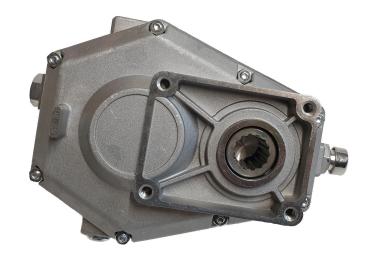
Minimizing Backlash and Ensuring Accurate Motion Transfer in Miter Gearboxes
Miter gearboxes are meticulously designed to minimize backlash and ensure precise and accurate motion transfer between the input and output shafts. Backlash refers to the slight movement or play between the gear teeth when the direction of rotation is changed. Minimizing backlash is essential for maintaining positional accuracy, reducing vibration, and achieving smooth motion in mechanical systems.
Several design features and engineering considerations contribute to minimizing backlash in miter gearboxes:
- High-Quality Gearing: Miter gearboxes use high-quality bevel gears with precisely machined teeth and tight manufacturing tolerances. This ensures a snug fit between the gear teeth, reducing the potential for any free movement or play.
- Preload and Gear Mesh Arrangement: Engineers carefully calculate and implement gear preloading, which involves applying a slight force between the gear mesh. This eliminates any clearance between the gear teeth, effectively reducing backlash.
- Bearing Arrangement: Proper bearing selection and arrangement play a critical role in minimizing backlash. High-quality bearings with minimal axial play are chosen to support the gear shafts and maintain precise alignment.
- Housing and Casing Rigidity: The gearbox housing is designed to provide optimal rigidity and support to the internal components. This helps prevent deflection or deformation that could contribute to backlash.
- Lubrification: Adequate lubrication is essential to reduce friction and wear between the gear teeth. Proper lubrication helps maintain the gear mesh and minimizes any irregular movement.
By incorporating these design principles and techniques, miter gearboxes are able to achieve accurate motion transfer with minimal backlash. This is particularly important in applications where precision positioning, synchronization, and reliable motion control are critical, such as robotics, CNC machinery, and automation systems.
Significance of the Angle Between Bevel Gears in a Miter Gearbox
The angle between bevel gears in a miter gearbox is of critical significance as it determines the direction of motion transmission and the type of mechanical arrangement that can be achieved.
In a miter gearbox, the angle between the bevel gears is typically set at 90 degrees. This means that the two intersecting shafts will rotate perpendicular to each other, allowing the transmission of motion from one shaft to another at a right angle.
The 90-degree angle between bevel gears is a fundamental feature that enables various applications where changes in motion direction are required within a compact space. This configuration allows for the redirection of rotational energy and torque, making it useful in applications such as changing the orientation of power flow, redirecting motion, and transmitting power around obstacles or corners.
It’s important to note that the angle between bevel gears can be customized to different values, but 90 degrees is the most common configuration in miter gearboxes due to its versatile and practical nature. The precise angle and arrangement of the bevel gears ensure efficient motion transmission while accommodating the specific requirements of the mechanical system in which the miter gearbox is used.


editor by CX 2023-11-02