Descripción del Producto
Descripción del Producto
Here is our advantages when compare to similar products from China:
Post Hole Digger Auger Boxes. Gearboxes especially designed for use on grain augersThis selection of gearboxes, are designed specifically for use on grain handling augers. But can be used in other situations.Boxes from the general purpose section may also suit some applications.Size for examples for items please send us inquire!
Product Specifications
| ITEM | HN-01-725 |
| Ratio | 3.18:1 |
| Teeth | 11/35 |
| Module | 5.08 |
| Power | 40 |
| Rated Input | 540 rpm |
| Input/Output Description | Optic axis |
| Weight(N.W) | 28Kg |
Embalaje y envío
Equipment
Perfil de la empresa
HangZhou Hanon Technology Co.,ltd is a modern enterprise specilizing in the development,production,sales and services of Agricultural Parts like PTO shaft and Gearboxes and Hydraulic parts like Cylinder , Valve ,Gearpump and motor etc..
We adhere to the principle of ” High Quality, Customers’Satisfaction”, using advanced technology and equipments to ensure all the technical standards of transmission .We follow the principle of people first , trying our best to set up a pleasant surroundings and platform of performance for each employee. So everyone can be self-consciously active to join Hanon Machinery.
Preguntas frecuentes
1.WHAT’S THE PAYMENT TERM?
When we quote for you,we will confirm with you the way of transaction,FOB,CIFetc.<br> For mass production goods, you need to pay 30% deposit before producing and70% balance against copy of documents.The most common way is by T/T.
2.HOW TO DELIVER THE GOODS TO US?
Usually we will ship the goods to you by sea.
3.How long is your delivery time and shipment?
30-45days
| Tipo: | Pit Digger |
|---|---|
| Uso: | Agricultural Machinery |
| Material: | 20 Crmnti |
| Peso: | 22-49kg |
| After-sales Service: | Online Support |
| Garantía: | 1 Year |
| Samples: |
US$ 30/Piece
1 Piece(Min.Order) | |
|---|
| Personalización: |
Disponible
| Solicitud personalizada |
|---|
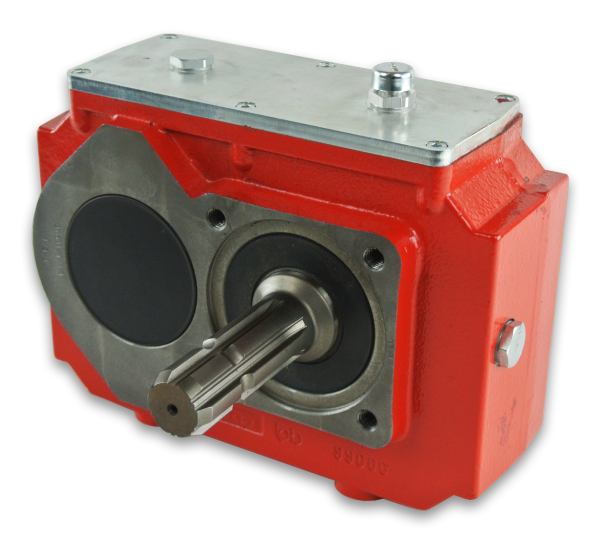
Challenges in Using Miter Gearboxes
While miter gearboxes offer various advantages, they also come with certain challenges that need to be addressed:
Lubrication: Proper lubrication is crucial for miter gearboxes to minimize friction, heat, and wear between gear teeth. Ensuring consistent and sufficient lubrication in the gearbox can be challenging, especially in enclosed or hard-to-reach spaces.
Maintenance: Miter gearboxes require periodic maintenance to ensure their optimal performance and longevity. Maintenance tasks may include checking and replenishing lubrication, inspecting gear teeth for wear, and addressing any misalignment or mounting issues that may arise over time.
Backlash: Backlash, or the clearance between gear teeth, can impact the accuracy of motion transfer. Excessive backlash can lead to reduced precision and positioning errors in applications that require high accuracy.
Complex Design: Miter gearboxes have a more intricate design compared to some other gearbox types, which can make manufacturing, assembly, and maintenance more complex. This complexity may also result in higher manufacturing and maintenance costs.
Efficiency Loss: Miter gearboxes can experience efficiency losses due to factors such as friction and misalignment. These losses can reduce the overall efficiency of power transmission, leading to energy wastage.
Space Constraints: In some applications, space limitations can pose a challenge when integrating miter gearboxes, especially when larger gear ratios are required to achieve the desired motion direction change.
Shock Loads: Applications subject to sudden shock loads or high impact forces can pose challenges for miter gearboxes. Adequate measures, such as using shock-absorbing components or designing for higher durability, may be required to address these challenges.
Alignment and Mounting: Proper alignment and mounting of miter gearboxes are critical to ensure smooth operation and prevent premature wear. Achieving precise alignment can be challenging, especially in installations with limited access or complex geometries.
Cost Considerations: The design complexity and manufacturing requirements of miter gearboxes can contribute to higher costs compared to simpler gearbox types. Balancing the benefits of miter gearboxes with the associated costs is essential during the selection process.
Addressing these challenges often requires careful engineering, proper maintenance practices, and consideration of specific application requirements. Despite the challenges, miter gearboxes remain valuable components in various industries where their unique motion direction-changing capabilities are advantageous.
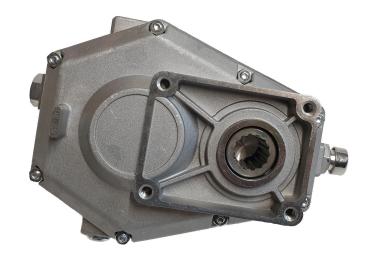
Minimizing Backlash and Ensuring Accurate Motion Transfer in Miter Gearboxes
Miter gearboxes are meticulously designed to minimize backlash and ensure precise and accurate motion transfer between the input and output shafts. Backlash refers to the slight movement or play between the gear teeth when the direction of rotation is changed. Minimizing backlash is essential for maintaining positional accuracy, reducing vibration, and achieving smooth motion in mechanical systems.
Several design features and engineering considerations contribute to minimizing backlash in miter gearboxes:
- High-Quality Gearing: Miter gearboxes use high-quality bevel gears with precisely machined teeth and tight manufacturing tolerances. This ensures a snug fit between the gear teeth, reducing the potential for any free movement or play.
- Preload and Gear Mesh Arrangement: Engineers carefully calculate and implement gear preloading, which involves applying a slight force between the gear mesh. This eliminates any clearance between the gear teeth, effectively reducing backlash.
- Bearing Arrangement: Proper bearing selection and arrangement play a critical role in minimizing backlash. High-quality bearings with minimal axial play are chosen to support the gear shafts and maintain precise alignment.
- Housing and Casing Rigidity: The gearbox housing is designed to provide optimal rigidity and support to the internal components. This helps prevent deflection or deformation that could contribute to backlash.
- Lubrication: Adequate lubrication is essential to reduce friction and wear between the gear teeth. Proper lubrication helps maintain the gear mesh and minimizes any irregular movement.
By incorporating these design principles and techniques, miter gearboxes are able to achieve accurate motion transfer with minimal backlash. This is particularly important in applications where precision positioning, synchronization, and reliable motion control are critical, such as robotics, CNC machinery, and automation systems.
Significance of the Angle Between Bevel Gears in a Miter Gearbox
The angle between bevel gears in a miter gearbox is of critical significance as it determines the direction of motion transmission and the type of mechanical arrangement that can be achieved.
In a miter gearbox, the angle between the bevel gears is typically set at 90 degrees. This means that the two intersecting shafts will rotate perpendicular to each other, allowing the transmission of motion from one shaft to another at a right angle.
The 90-degree angle between bevel gears is a fundamental feature that enables various applications where changes in motion direction are required within a compact space. This configuration allows for the redirection of rotational energy and torque, making it useful in applications such as changing the orientation of power flow, redirecting motion, and transmitting power around obstacles or corners.
It’s important to note that the angle between bevel gears can be customized to different values, but 90 degrees is the most common configuration in miter gearboxes due to its versatile and practical nature. The precise angle and arrangement of the bevel gears ensure efficient motion transmission while accommodating the specific requirements of the mechanical system in which the miter gearbox is used.


editor by CX 2023-11-02