Description du produit
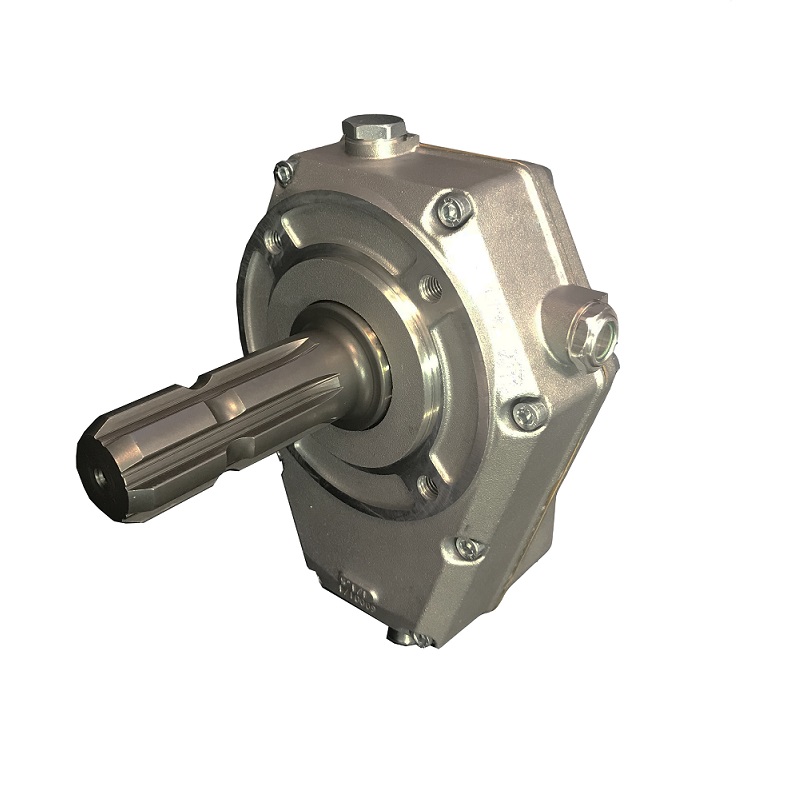
Agricultural Pto Gearbox Gear Box for Machinery Application Durable Speed Increaser Manufacturers Suppliers Tractors Power Take Offs 540 Reducer Pto Gearbox
| Application: | Motor, Electric Cars, Motorcycle, Machinery, Marine, Toy, Agricultural Machinery, Car |
|---|---|
| Function: | Distribution Power, Clutch, Change Drive Torque, Change Drive Direction, Speed Changing, Speed Reduction, Speed Increase |
| Layout: | Three-Ring |
| Hardness: | Hardened Tooth Surface |
| Installation: | Torque Arm Type |
| Step: | Stepless |
| Exemples : |
US$ 9999/Piece
1 pièce (commande minimale) | |
|---|
Lubrication Requirements for Smooth Functioning of Miter Gearboxes
Proper lubrication is crucial for ensuring the smooth and efficient operation of miter gearboxes. Follow these lubrication requirements to maintain optimal gearbox performance:
- Appropriate Lubricant: Select a high-quality lubricant specifically designed for gear applications. The lubricant should have the necessary viscosity and additives to provide adequate protection and reduce friction.
- Lubricant Compatibility: Ensure that the selected lubricant is compatible with the materials used in the gearbox components, such as gears, shafts, and bearings. Incompatible lubricants can lead to degradation of materials and reduced performance.
- Lubrication Interval: Follow the manufacturer’s recommendations for lubrication frequency. Regular lubrication helps prevent wear, reduce friction, and dissipate heat generated during operation.
- Proper Quantity: Apply the correct amount of lubricant to ensure proper coverage of gear teeth and other moving parts. Insufficient lubrication can lead to increased friction and premature wear.
- Lubrication Method: Use the recommended lubrication method, which may involve oil bath, splash lubrication, or forced lubrication, depending on the gearbox design and application.
- Temperature Considerations: Take into account the operating temperature of the gearbox and choose a lubricant that can withstand the temperature range. Extreme temperatures can affect the viscosity and performance of the lubricant.
- Sealing and Contamination Prevention: Ensure that the gearbox is properly sealed to prevent the entry of contaminants, such as dirt, dust, and moisture, which can degrade the lubricant and cause damage to components.
- Regular Inspection: Periodically inspect the lubricant for signs of contamination, degradation, or depletion. Replace the lubricant if any abnormalities are detected.
- Re-greasing: In cases where miter gearboxes are subjected to heavy loads, high speeds, or harsh conditions, consider implementing a re-greasing schedule to maintain adequate lubrication levels and extend component life.
Following these lubrication requirements ensures that miter gearboxes operate smoothly, efficiently, and with reduced wear, ultimately contributing to the overall reliability and longevity of the mechanical system.
Différences entre les boîtes de vitesses à engrenages coniques et les autres types de boîtes de vitesses
Les réducteurs à engrenages coniques possèdent des caractéristiques distinctes qui les différencient des autres types de réducteurs, tels que les réducteurs hélicoïdaux, à engrenages droits et planétaires. Ces différences contribuent à leurs capacités uniques et à leur adéquation à des applications spécifiques :
- Configuration des engrenages : Les réducteurs à engrenages coniques utilisent des engrenages à denture droite qui se croisent à angle droit. En revanche, les réducteurs à engrenages hélicoïdaux et droits utilisent des engrenages parallèles ou coplanaires, et les réducteurs planétaires comportent plusieurs engrenages disposés autour d'une roue solaire centrale.
- Changement de direction du mouvement : Les réducteurs à onglet excellent dans la modification du sens de rotation à 90 degrés. D'autres réducteurs peuvent modifier le sens de rotation selon différents angles ou le maintenir.
- Compacité : Les réducteurs à engrenages coniques sont réputés pour leur conception compacte, ce qui les rend adaptés aux applications où l'espace est limité. Les réducteurs planétaires, bien que compacts, possèdent une structure interne différente.
- Contrôle du jeu : Les réducteurs à engrenages coniques sont conçus pour minimiser le jeu et garantir une transmission de mouvement précise. Les réducteurs à engrenages hélicoïdaux et droits peuvent présenter un jeu plus important en raison de leur agencement, tandis que les réducteurs planétaires offrent un bon contrôle du jeu.
- Couple et vitesse : Les réducteurs se distinguent par leurs capacités de couple et de vitesse. Les réducteurs à engrenages coniques conviennent aux applications à couple et vitesse modérés, tandis que les réducteurs planétaires offrent une densité de couple élevée.
- Applications : Les réducteurs à engrenages coniques sont couramment utilisés pour les applications nécessitant des changements de direction de 90 degrés, comme les systèmes de convoyage, les machines d'impression et certains types d'équipements industriels. Les réducteurs à engrenages hélicoïdaux et droits sont répandus dans diverses machines et équipements. Les réducteurs planétaires sont utilisés en robotique, dans l'aérospatiale et dans les machines lourdes.
Chaque type de boîte de vitesses présente ses propres avantages et est choisi en fonction des exigences spécifiques de l'application, notamment les contraintes d'espace, la précision du contrôle du mouvement, le couple et les besoins en vitesse.
Miter Gearbox: Function and Mechanism
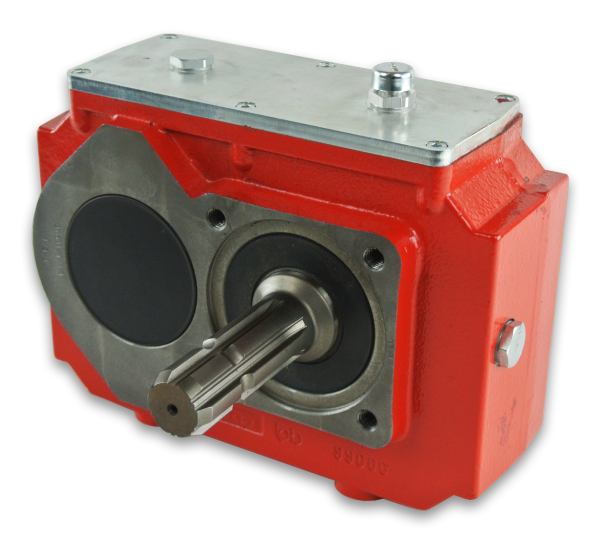
A miter gearbox, also known as a bevel gearbox or angle gearbox, is a type of gearbox that transmits power and changes the direction of rotational motion between intersecting shafts positioned at a 90-degree angle to each other. It consists of a set of bevel gears with intersecting axes.
The function of a miter gearbox in mechanical systems is to redirect the rotational motion of input shaft(s) to output shaft(s) at a right angle. This allows for power transmission and torque conversion between two shafts that are not aligned. Miter gearboxes are particularly useful when space constraints or specific mechanical configurations require a change in the direction of motion.
The working principle of a miter gearbox involves the meshing of bevel gears. Bevel gears have conically shaped teeth that enable them to mesh smoothly at a 90-degree angle. When the input shaft rotates, the teeth of the input bevel gear engage with the teeth of the output bevel gear, causing the output shaft to rotate perpendicularly to the input shaft. The gear ratio and number of teeth on the gears determine the speed and torque conversion between the input and output shafts.
Miter gearboxes find applications in various industries, such as automotive, machinery, agriculture, and robotics, where changes in motion direction are required. They are often used in equipment that needs to transmit power around corners or in tight spaces while maintaining the desired torque and speed characteristics.


editor by CX 2023-10-19