Produktbeschreibung
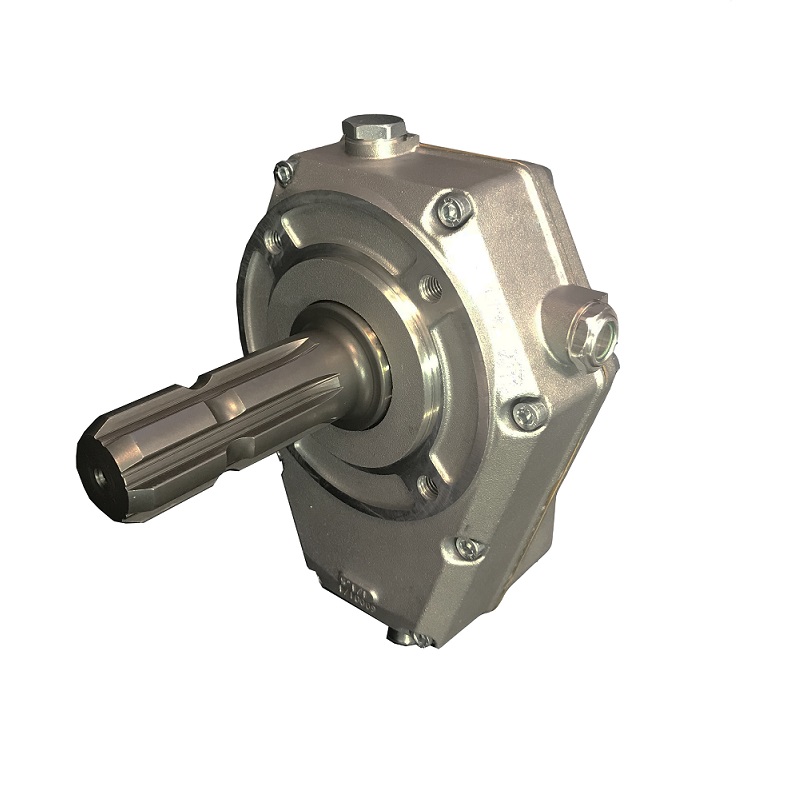
Agricultural Pto Gearbox Gear Box for Machinery Application Durable Speed Increaser Manufacturers Suppliers Tractors Power Take Offs 540 Reducer Pto Gearbox
| Anwendung: | Motoren, Elektroautos, Motorräder, Maschinen, Schiffsmaschinen, Spielzeug, Landmaschinen, Autos |
|---|---|
| Funktion: | Kraftverteilung, Kupplung, Antriebsmoment ändern, Antriebsrichtung ändern, Geschwindigkeit ändern, Geschwindigkeit reduzieren, Geschwindigkeit erhöhen |
| Layout: | Three-Ring |
| Härte: | Gehärtete Zahnoberfläche |
| Installation: | Torque Arm Type |
| Schritt: | Stepless |
| Proben: |
US$ 9999/Piece
1 Stück (Mindestbestellmenge) | |
|---|
Lubrication Requirements for Smooth Functioning of Miter Gearboxes
Proper lubrication is crucial for ensuring the smooth and efficient operation of miter gearboxes. Follow these lubrication requirements to maintain optimal gearbox performance:
- Appropriate Lubricant: Select a high-quality lubricant specifically designed for gear applications. The lubricant should have the necessary viscosity and additives to provide adequate protection and reduce friction.
- Lubricant Compatibility: Ensure that the selected lubricant is compatible with the materials used in the gearbox components, such as gears, shafts, and bearings. Incompatible lubricants can lead to degradation of materials and reduced performance.
- Lubrication Interval: Follow the manufacturer’s recommendations for lubrication frequency. Regular lubrication helps prevent wear, reduce friction, and dissipate heat generated during operation.
- Proper Quantity: Apply the correct amount of lubricant to ensure proper coverage of gear teeth and other moving parts. Insufficient lubrication can lead to increased friction and premature wear.
- Lubrication Method: Use the recommended lubrication method, which may involve oil bath, splash lubrication, or forced lubrication, depending on the gearbox design and application.
- Temperature Considerations: Take into account the operating temperature of the gearbox and choose a lubricant that can withstand the temperature range. Extreme temperatures can affect the viscosity and performance of the lubricant.
- Sealing and Contamination Prevention: Ensure that the gearbox is properly sealed to prevent the entry of contaminants, such as dirt, dust, and moisture, which can degrade the lubricant and cause damage to components.
- Regular Inspection: Periodically inspect the lubricant for signs of contamination, degradation, or depletion. Replace the lubricant if any abnormalities are detected.
- Re-greasing: In cases where miter gearboxes are subjected to heavy loads, high speeds, or harsh conditions, consider implementing a re-greasing schedule to maintain adequate lubrication levels and extend component life.
Following these lubrication requirements ensures that miter gearboxes operate smoothly, efficiently, and with reduced wear, ultimately contributing to the overall reliability and longevity of the mechanical system.
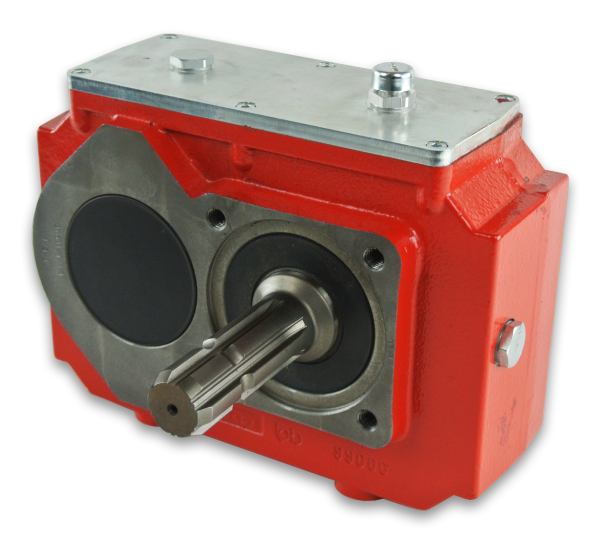
Unterschiede zwischen Winkelgetrieben und anderen Getriebetypen
Winkelgetriebe weisen besondere Merkmale auf, die sie von anderen Getriebetypen wie Stirnrad-, Stirnrad- und Planetengetrieben unterscheiden. Diese Unterschiede tragen zu ihren einzigartigen Fähigkeiten und ihrer Eignung für spezifische Anwendungen bei:
- Getriebeanordnung: Winkelgetriebe verwenden Kegelräder, die sich in einem 90-Grad-Winkel schneiden. Im Gegensatz dazu verwenden Stirnrad- und Schrägverzahnungsgetriebe parallele oder koplanare Zahnradanordnungen, und Planetengetriebe verfügen über mehrere Zahnräder, die um ein zentrales Sonnenrad angeordnet sind.
- Änderung der Bewegungsrichtung: Winkelgetriebe zeichnen sich dadurch aus, dass sie die Drehrichtung um 90 Grad ändern können. Andere Getriebe können die Drehrichtung um unterschiedliche Winkel ändern oder die gleiche Richtung beibehalten.
- Kompaktheit: Winkelgetriebe sind für ihre kompakte Bauweise bekannt und eignen sich daher für Anwendungen mit begrenztem Platzangebot. Planetengetriebe sind zwar ebenfalls kompakt, weisen aber eine andere interne Struktur auf.
- Spielkontrolle: Kegelradgetriebe sind so konstruiert, dass sie das Zahnflankenspiel minimieren und eine präzise Kraftübertragung gewährleisten. Stirnrad- und Schrägverzahnungsgetriebe können aufgrund ihrer Zahnradanordnung ein höheres Zahnflankenspiel aufweisen, während Planetengetriebe eine gute Zahnflankenspielkontrolle ermöglichen.
- Drehmoment und Geschwindigkeit: Verschiedene Getriebearten unterscheiden sich in ihrem Drehmoment- und Drehzahlvermögen. Kegelradgetriebe eignen sich für Anwendungen mit mittlerem Drehmoment und mittlerer Drehzahl, während Planetengetriebe eine hohe Drehmomentdichte bieten.
- Anwendungsbereiche: Winkelgetriebe werden häufig für Anwendungen eingesetzt, die eine 90-Grad-Drehrichtungsänderung erfordern, wie z. B. Fördersysteme, Druckmaschinen und bestimmte Industrieanlagen. Stirnrad- und Kegelradgetriebe sind in verschiedenen Maschinen und Anlagen weit verbreitet. Planetengetriebe finden Anwendung in der Robotik, der Luft- und Raumfahrt sowie im Schwermaschinenbau.
Jeder Getriebetyp hat seine eigenen Vorteile und wird anhand der spezifischen Anforderungen der Anwendung ausgewählt, darunter Platzbeschränkungen, Präzision der Bewegungssteuerung, Drehmoment- und Drehzahlbedarf.
Miter Gearbox: Function and Mechanism
A miter gearbox, also known as a bevel gearbox or angle gearbox, is a type of gearbox that transmits power and changes the direction of rotational motion between intersecting shafts positioned at a 90-degree angle to each other. It consists of a set of bevel gears with intersecting axes.
The function of a miter gearbox in mechanical systems is to redirect the rotational motion of input shaft(s) to output shaft(s) at a right angle. This allows for power transmission and torque conversion between two shafts that are not aligned. Miter gearboxes are particularly useful when space constraints or specific mechanical configurations require a change in the direction of motion.
The working principle of a miter gearbox involves the meshing of bevel gears. Bevel gears have conically shaped teeth that enable them to mesh smoothly at a 90-degree angle. When the input shaft rotates, the teeth of the input bevel gear engage with the teeth of the output bevel gear, causing the output shaft to rotate perpendicularly to the input shaft. The gear ratio and number of teeth on the gears determine the speed and torque conversion between the input and output shafts.
Miter gearboxes find applications in various industries, such as automotive, machinery, agriculture, and robotics, where changes in motion direction are required. They are often used in equipment that needs to transmit power around corners or in tight spaces while maintaining the desired torque and speed characteristics.


editor by CX 2023-10-19