Opis produktu
1.15m Wide Italian PTO Driven Flail Mower (EFGC115)
Opis produktu
Side-shift Heavy Flail Mower – EFGC
Uses:
The EFGC & EFGCH models are stronger and more powerful for maintaining more rugged landscape areas including heavy grasses, storm debris, sticks, vines and more around farms, properties, parklands and roadsides~ Idea for thick grass, sticks, undergrowth and light vine mulching~ Vegetable & pasture topping~ Roadside maintenance
Feature:
The EFGC & EFGCH Series are heavy duty flail mower that are strong and reliable for heavier work loads~ The low weight and power requirement of the flail mowers make it suitable for use with small to medium sized tractor~ The EFGC & EFGCH range of flail mowers are fitted with a high power 50hp gear box and robust drive line to give hassle free mowing~ Cutting height controlled by adjustable skids~ Height strength mulching blades~ Safety flaps~ Extra strong and designed with safety in mind~ Support leg for storage~ CHINAMFG hitch.
Specifications:
Model: EFGC115
Net Weight: 235KG
Gross Weight: 270KG
Working Width: 1120mm
PTO Turning Speed: 540r/min
Flail Type: Y Blade / Hammer
Number Of Flails: Hammer: 18/ Y Blade: 36
Tractor HP: 18-25hp
Why choose CHINAMFG IMPLEMENT:
Any quality problem you have in 1 year, we promise to help you solve asap.
Every customer to us is unique, best service will give you.
We provide you our machine with good material and promise not to deduct the material.
Every model of our machine will have a testing before the delivery to the port.
If you want to visit our factory, our boss will give you a best reception.
Every year’s Christmas we prepare gifts to our customer.
Every year we attend the agricultural exhibition in Germany or Italy.
Shipment
Workshop
Certificate
| Type: | Rotary Mowers |
|---|---|
| Moving Way: | Tractor-Mounted |
| Cutter Type: | Rotary Lawn Mower |
| Applicable Area: | 500-1000m² |
| Feature: | 2-Stroke, Steel Chassis, Mulch |
| Certification: | CE |
| Personalizacja: |
Dostępny
| Spersonalizowane żądanie |
|---|
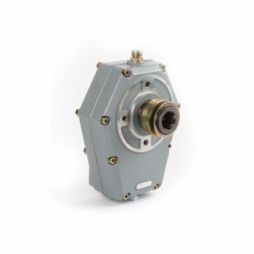
Main Advantages of Using Miter Gearboxes for Space-Saving Design
Miter gearboxes offer several significant advantages when it comes to space-saving design:
Compact Configuration: Miter gearboxes are designed with bevel gears that transmit motion at a 90-degree angle within a single gearbox housing. This eliminates the need for additional components or complex transmission systems, resulting in a more compact overall design.
Efficient Use of Space: The 90-degree motion change provided by miter gearboxes allows for optimal space utilization in applications where a change in motion direction is required. This efficient use of space is particularly valuable in tight or constrained environments.
Integration into Small Spaces: Miter gearboxes are well-suited for integration into machinery, equipment, and systems with limited available space. Their compact design enables them to fit into confined areas without sacrificing performance.
Reduced Footprint: By eliminating the need for additional components or external motion-changing mechanisms, miter gearboxes help reduce the overall footprint of the system. This can be especially beneficial in applications where space is at a premium.
Enhanced Flexibility: The space-saving design of miter gearboxes allows engineers and designers to create more versatile and adaptable systems. Components can be arranged more efficiently, and the saved space can be allocated for other functional elements.
Modular Assembly: Miter gearboxes can be part of modular designs, where multiple components can be easily integrated and interconnected. This modular approach further contributes to space savings and allows for customization.
Cost Efficiency: The compact nature of miter gearboxes can lead to cost savings in terms of materials, manufacturing, and assembly. The simplified design also reduces the risk of potential failures or maintenance issues associated with more complex systems.
Overall, miter gearboxes offer a space-saving design that is valuable in a wide range of applications, from industrial machinery to robotics, where efficient use of available space is crucial.
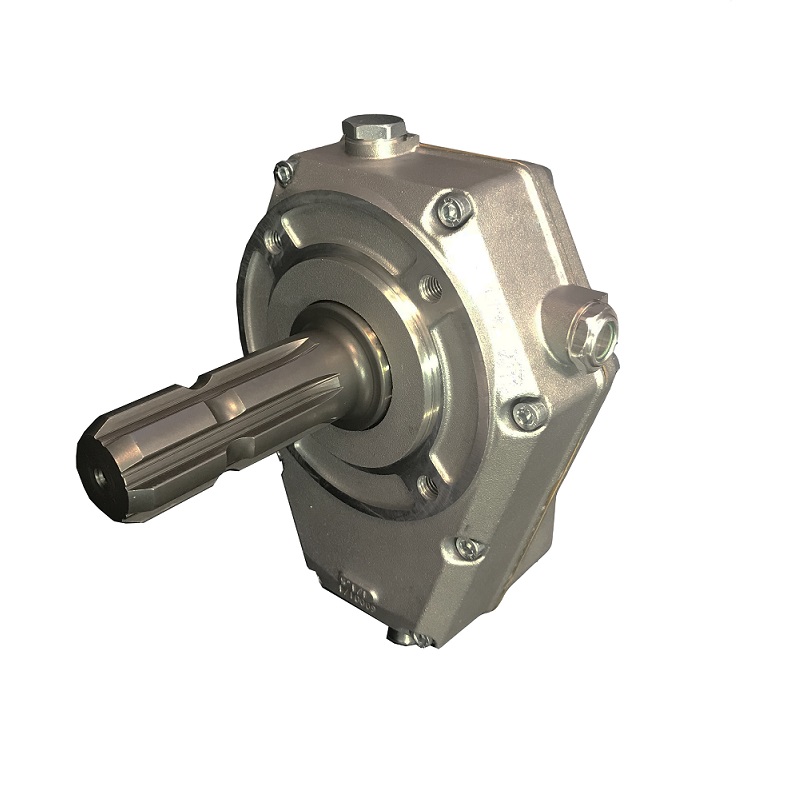
Przekładnie kątowe w zastosowaniach motoryzacyjnych, zwłaszcza w układach kierowniczych
Przekładnie kątowe odgrywają kluczową rolę w zastosowaniach motoryzacyjnych, szczególnie w układach kierowniczych, gdzie służą do zmiany kierunku ruchu o 90 stopni. Oto jak przekładnie kątowe działają w samochodowych układach kierowniczych:
Mechanizm kierowniczy: W pojazdach kolumna kierownicy zapewnia ruch obrotowy, który musi być przenoszony na koła pod kątem prostym, aby zapewnić skuteczną kontrolę nad układem kierowniczym. Aby uzyskać tę zmianę ruchu, w układzie kierowniczym zintegrowane są przekładnie kątowe.
Zmiana kąta: Przekładnie kątowe pobierają siłę obrotową z kolumny kierownicy i przekazują ją za pomocą przekładni stożkowych ustawionych pod kątem 90 stopni. Pozwala to na skierowanie ruchu w stronę drążka kierowniczego, a ostatecznie na koła.
Precyzja i dokładność: Układy kierownicze w samochodach wymagają precyzyjnej i responsywnej kontroli ruchu. Przekładnie kątowe zapewniają precyzyjne przenoszenie ruchu, umożliwiając kierowcom niezawodną i płynną kontrolę układu kierowniczego.
Kompaktowa konstrukcja: Przekładnie kątowe mają kompaktową i oszczędzającą miejsce konstrukcję, dzięki czemu nadają się do montażu w ograniczonej przestrzeni kolumny kierowniczej pojazdu.
Zmniejszony luz: Aby zapewnić bezpieczeństwo i szybkość reakcji, przekładnie kątowe zaprojektowano tak, aby zminimalizować luz, co jest kluczowe dla zachowania dokładnej kontroli nad kierunkiem jazdy pojazdu.
Trwałość: Zastosowania motoryzacyjne wymagają trwałości i niezawodności. Przekładnie kątowe są projektowane tak, aby wytrzymywały warunki i obciążenia występujące w pojazdach, zapewniając długotrwałą wydajność.
Przekładnie kątowe przyczyniają się do wydajnej i efektywnej pracy układów kierowniczych w pojazdach, oferując kierowcom kontrolę niezbędną do bezpiecznego i wygodnego poruszania się.
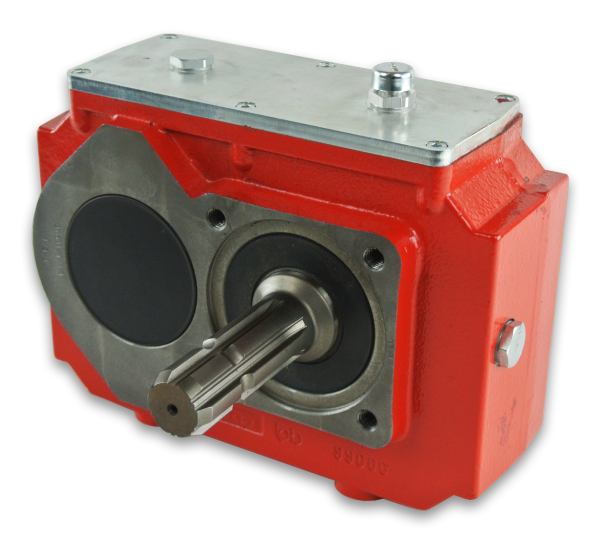
Miter Gearbox: Function and Mechanism
A miter gearbox, also known as a bevel gearbox or angle gearbox, is a type of gearbox that transmits power and changes the direction of rotational motion between intersecting shafts positioned at a 90-degree angle to each other. It consists of a set of bevel gears with intersecting axes.
The function of a miter gearbox in mechanical systems is to redirect the rotational motion of input shaft(s) to output shaft(s) at a right angle. This allows for power transmission and torque conversion between two shafts that are not aligned. Miter gearboxes are particularly useful when space constraints or specific mechanical configurations require a change in the direction of motion.
The working principle of a miter gearbox involves the meshing of bevel gears. Bevel gears have conically shaped teeth that enable them to mesh smoothly at a 90-degree angle. When the input shaft rotates, the teeth of the input bevel gear engage with the teeth of the output bevel gear, causing the output shaft to rotate perpendicularly to the input shaft. The gear ratio and number of teeth on the gears determine the speed and torque conversion between the input and output shafts.
Miter gearboxes find applications in various industries, such as automotive, machinery, agriculture, and robotics, where changes in motion direction are required. They are often used in equipment that needs to transmit power around corners or in tight spaces while maintaining the desired torque and speed characteristics.


editor by CX 2023-09-21