Product Description
Packaging & Delivery
1.Nude package
2.Iron frame for SKD(Easy to Assembly in Destination)
Delivery Time:20 days after received your advance payment
Huabo New Agricultural 55HP Farm Tractor with Competitive Price
General Specification:
This series tractors is designed basing on the normal type, and marking stronger design.Also euipped with PTO under the International standard.This weeeled tractor is four-wheel drive for agriculture. It use a (4+1)x2 gearbox, a sliding gear and a meshing sleeve to shift gears, and the front wheel is hydraulically steered. Its operation is flexible: the front and rear wheel tracks are adjustable step by step, with two-speed power outout,and s semi-split hydraulic suspension system. It’s operation adaptability is good.
Company Overview
About us—HangZhou CZPT Agricultural Equipment Co., Ltd is Located in the world’s capital of kite and the city of green power-HangZhou. It is in the Economic Development Area of HangZhou and only 3 kilometers to the expressway station of HangZhou West, the traffic is very convenient.
The area of the company and its factory is about 2000, 000 square meters and is 1 modern private enterprise with research, production, and sale. The company has pursued perfect and done things seriously. It has the courage of innovation and has insisted on the production idea of high standard and high quality so its products have been optimized and upgraded constantly. And then the enterprise developed and grown steadily. The company has strong technology force and superior machine and equipments with the auto assemaly line which is advanced in China. The products are in strict compliance with the international norms of quality system and have mature guarantee service system so they have adopted 2000 edition ISO9001 international quality management system certificate. Futher more, CZPT brand products have ever been awarded national patents 10 times by the State Intellectual Property Office.
FAQ
(1). Manufacturer or Trading Company
We are a leading tractor manufacturer for 14 years, and specialize in 12-150Hp tractors in China.
(2). MOQ
1 unit
(3). Spare Parts
Free toolbox and easy wear parts.
(4). Shippment
We can help you arrange shippment.
(5). Delivery Time
Usually 25 days
(6). Warranty Time
Complete service system, 18 months since arrival of destination port
(7). Payment Terms
We accept 30%T/T in advance, and 70% T/T after shipping or L/C at sight.
(8). Tractor Options
Can be equipped with ROPS, Canopy, Cabin, AC Cabin, Air Brakes, Hydraulic Valve Out, Paddy Tire, Turf Tire or as per your requirements.
(9). Tractor Logo
We have our own logo. And we also can make your own logo in your order for free.
(10). Package and Loading qty
1.Nude Package: 3 complete units/40GP, 3 complete units with Cabin/40HQ
2.SKD Iron Frame Package: 8 units/40HQ
(11). Tractor Implements
Loader, Mower, Plough, Trailer, Slasher, Snow Blower or as per your requirements.
(12). Part supply
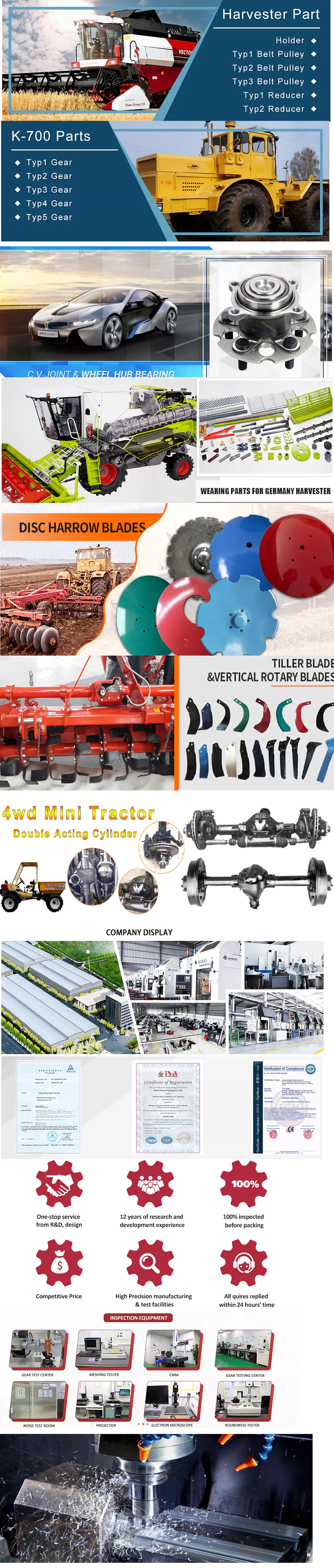
Complete Parts Workshop, and can supply all parts, pic as below
For More Details, Please contact us
| Model | HB404 | HB454 | HB484 | HB504 | HB554 |
| Type | 40HP 4WD | 45HP 4WD | 48HP 4WD | 50HP 4WD | 55HP 4WD |
| Overall Dimentions (mm) | L x W x H: 3550 x 1660 x 1550 | ||||
| Front Wheel Distance(mm) | 1300 | ||||
| Back Wheel Distance(mm) | 1300 | ||||
| Wheel Base(mm) | 1980 | ||||
| Min Ground Clearance (mm) | 300 | 350 | |||
| Front Tire(mm) | 6.5-16 | ||||
| Back Tire(mm) | 11.2-24 | ||||
| Net Weight(kg) | 1710 | ||||
| Rated Traction Force(kn) | 9.7-12.8 | ||||
| Engine | |||||
| Model | JDM490 | JD495 | XC498 | JD4100 | JD4102 |
| Type | vertical, 4-cylinder, water cooled and 4-stokes | ||||
| Rated Speed | 2300/2400rpm | ||||
| Rated Power | 29.4 ~ 34.34kw | ||||
| Transmission Gear Box | (4+1)*2 | ||||
| Clutch | Dry Single-stage or Dual-stage Clutch | ||||
| Steering | Hydraulic Steering | ||||
| PTO | 540/1000 | ||||
| Rate Power | 25.7-40.4kw | ||||
| Hydraulic Gear Pump | Two Hydraulic Pumps | ||||
| Model | HB404 | HB454 | HB484 | HB504 | HB554 |
| Type | 40HP 4WD | 45HP 4WD | 48HP 4WD | 50HP 4WD | 55HP 4WD |
| Overall Dimentions (mm) | L x W x H: 3550 x 1660 x 1550 | ||||
| Front Wheel Distance(mm) | 1300 | ||||
| Back Wheel Distance(mm) | 1300 | ||||
| Wheel Base(mm) | 1980 | ||||
| Min Ground Clearance (mm) | 300 | 350 | |||
| Front Tire(mm) | 6.5-16 | ||||
| Back Tire(mm) | 11.2-24 | ||||
| Net Weight(kg) | 1710 | ||||
| Rated Traction Force(kn) | 9.7-12.8 | ||||
| Engine | |||||
| Model | JDM490 | JD495 | XC498 | JD4100 | JD4102 |
| Type | vertical, 4-cylinder, water cooled and 4-stokes | ||||
| Rated Speed | 2300/2400rpm | ||||
| Rated Power | 29.4 ~ 34.34kw | ||||
| Transmission Gear Box | (4+1)*2 | ||||
| Clutch | Dry Single-stage or Dual-stage Clutch | ||||
| Steering | Hydraulic Steering | ||||
| PTO | 540/1000 | ||||
| Rate Power | 25.7-40.4kw | ||||
| Hydraulic Gear Pump | Two Hydraulic Pumps | ||||
Screw Shaft Features Explained
When choosing the screw shaft for your application, you should consider the features of the screws: threads, lead, pitch, helix angle, and more. You may be wondering what these features mean and how they affect the screw’s performance. This article explains the differences between these factors. The following are the features that affect the performance of screws and their properties. You can use these to make an informed decision and purchase the right screw. You can learn more about these features by reading the following articles.
Threads
The major diameter of a screw thread is the larger of the two extreme diameters. The major diameter of a screw is also known as the outside diameter. This dimension can’t be directly measured, but can be determined by measuring the distance between adjacent sides of the thread. In addition, the mean area of a screw thread is known as the pitch. The diameter of the thread and pitch line are directly proportional to the overall size of the screw.
The threads are classified by the diameter and pitch. The major diameter of a screw shaft has the largest number of threads; the smaller diameter is called the minor diameter. The thread angle, also known as the helix angle, is measured perpendicular to the axis of the screw. The major diameter is the largest part of the screw; the minor diameter is the lower end of the screw. The thread angle is the half distance between the major and minor diameters. The minor diameter is the outer surface of the screw, while the top surface corresponds to the major diameter.
The pitch is measured at the crest of a thread. In other words, a 16-pitch thread has a diameter of one sixteenth of the screw shaft’s diameter. The actual diameter is 0.03125 inches. Moreover, a large number of manufacturers use this measurement to determine the thread pitch. The pitch diameter is a critical factor in successful mating of male and female threads. So, when determining the pitch diameter, you need to check the thread pitch plate of a screw.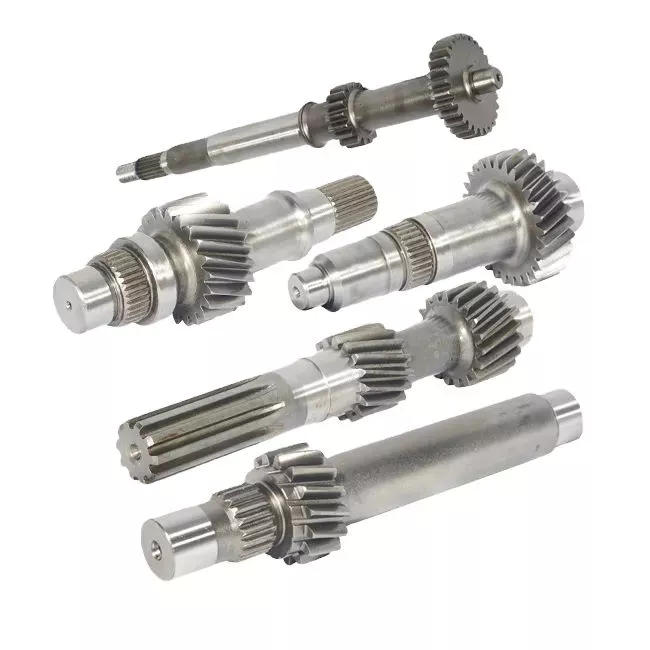
Lead
In screw shaft applications, a solid, corrosion-resistant material is an important requirement. Lead screws are a robust choice, which ensure shaft direction accuracy. This material is widely used in lathes and measuring instruments. They have black oxide coatings and are suited for environments where rusting is not acceptable. These screws are also relatively inexpensive. Here are some advantages of lead screws. They are highly durable, cost-effective, and offer high reliability.
A lead screw system may have multiple starts, or threads that run parallel to each other. The lead is the distance the nut travels along the shaft during a single revolution. The smaller the lead, the tighter the thread. The lead can also be expressed as the pitch, which is the distance between adjacent thread crests or troughs. A lead screw has a smaller pitch than a nut, and the smaller the lead, the greater its linear speed.
When choosing lead screws, the critical speed is the maximum number of revolutions per minute. This is determined by the minor diameter of the shaft and its length. The critical speed should never be exceeded or the lead will become distorted or cracked. The recommended operational speed is around eighty percent of the evaluated critical speed. Moreover, the lead screw must be properly aligned to avoid excessive vibrations. In addition, the screw pitch must be within the design tolerance of the shaft.
Pitch
The pitch of a screw shaft can be viewed as the distance between the crest of a thread and the surface where the threads meet. In mathematics, the pitch is equivalent to the length of one wavelength. The pitch of a screw shaft also relates to the diameter of the threads. In the following, the pitch of a screw is explained. It is important to note that the pitch of a screw is not a metric measurement. In the following, we will define the two terms and discuss how they relate to one another.
A screw’s pitch is not the same in all countries. The United Kingdom, Canada, and the United States have standardized screw threads according to the UN system. Therefore, there is a need to specify the pitch of a screw shaft when a screw is being manufactured. The standardization of pitch and diameter has also reduced the cost of screw manufacturing. Nevertheless, screw threads are still expensive. The United Kingdom, Canada, and the United States have introduced a system for the calculation of screw pitch.
The pitch of a lead screw is the same as that of a lead screw. The diameter is 0.25 inches and the circumference is 0.79 inches. When calculating the mechanical advantage of a screw, divide the diameter by its pitch. The larger the pitch, the more threads the screw has, increasing its critical speed and stiffness. The pitch of a screw shaft is also proportional to the number of starts in the shaft.
Helix angle
The helix angle of a screw shaft is the angle formed between the circumference of the cylinder and its helix. Both of these angles must be equal to 90 degrees. The larger the lead angle, the smaller the helix angle. Some reference materials refer to angle B as the helix angle. However, the actual angle is derived from calculating the screw geometry. Read on for more information. Listed below are some of the differences between helix angles and lead angles.
High helix screws have a long lead. This length reduces the number of effective turns of the screw. Because of this, fine pitch screws are usually used for small movements. A typical example is a 16-mm x 5-inch screw. Another example of a fine pitch screw is a 12x2mm screw. It is used for small moves. This type of screw has a lower lead angle than a high-helix screw.
A screw’s helix angle refers to the relative angle of the flight of the helix to the plane of the screw axis. While screw helix angles are not often altered from the standard square pitch, they can have an effect on processing. Changing the helix angle is more common in two-stage screws, special mixing screws, and metering screws. When a screw is designed for this function, it should be able to handle the materials it is made of.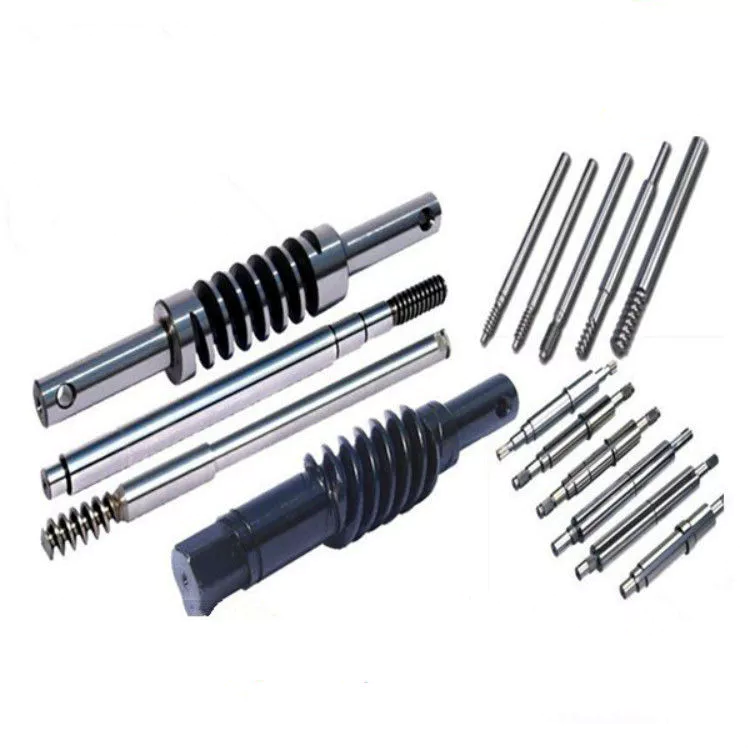
Size
The diameter of a screw is its diameter, measured from the head to the shaft. Screw diameters are standardized by the American Society of Mechanical Engineers. The diameters of screws range from 3/50 inches to sixteen inches, and more recently, fractions of an inch have been added. However, shaft diameters may vary depending on the job, so it is important to know the right size for the job. The size chart below shows the common sizes for screws.
Screws are generally referred to by their gauge, which is the major diameter. Screws with a major diameter less than a quarter of an inch are usually labeled as #0 to #14 and larger screws are labeled as sizes in fractions of an inch. There are also decimal equivalents of each screw size. These measurements will help you choose the correct size for your project. The screws with the smaller diameters were not tested.
In the previous section, we described the different shaft sizes and their specifications. These screw sizes are usually indicated by fractions of an inch, followed by a number of threads per inch. For example, a ten-inch screw has a shaft size of 2” with a thread pitch of 1/4″, and it has a diameter of two inches. This screw is welded to a two-inch Sch. 40 pipe. Alternatively, it can be welded to a 9-inch O.A.L. pipe.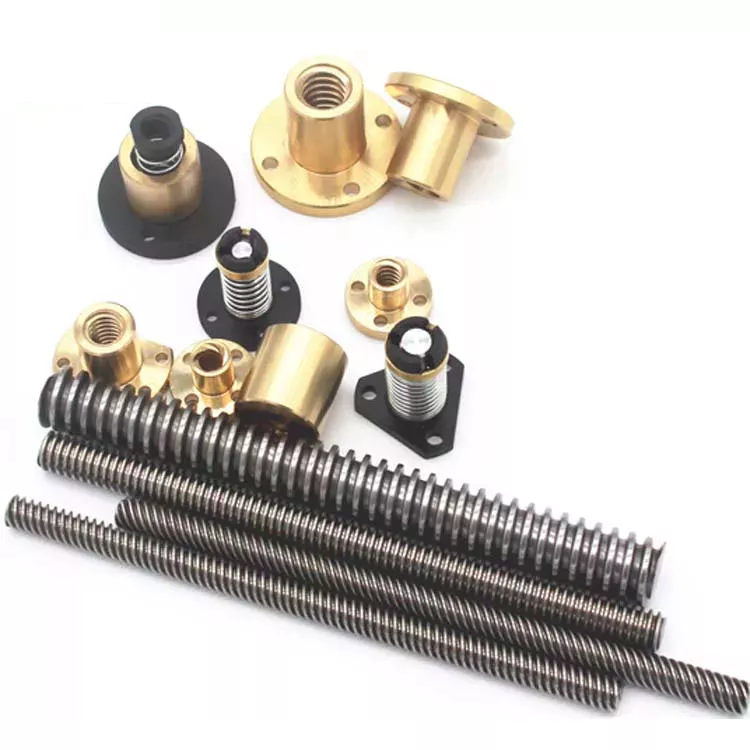
Shape
Screws come in a wide variety of sizes and shapes, from the size of a quarter to the diameter of a U.S. quarter. Screws’ main function is to hold objects together and to translate torque into linear force. The shape of a screw shaft, if it is round, is the primary characteristic used to define its use. The following chart shows how the screw shaft differs from a quarter:
The shape of a screw shaft is determined by two features: its major diameter, or distance from the outer edge of the thread on one side to the inner smooth surface of the shaft. These are generally two to sixteen millimeters in diameter. Screw shafts can have either a fully threaded shank or a half-threaded shank, with the latter providing better stability. Regardless of whether the screw shaft is round or domed, it is important to understand the different characteristics of a screw before attempting to install it into a project.
The screw shaft’s diameter is also important to its application. The ball circle diameter refers to the distance between the center of two opposite balls in contact with the grooves. The root diameter, on the other hand, refers to the distance between the bottommost grooves of the screw shaft. These are the two main measurements that define the screw’s overall size. Pitch and nominal diameter are important measurements for a screw’s performance in a particular application.
Lubrication
In most cases, lubrication of a screw shaft is accomplished with grease. Grease is made up of mineral or synthetic oil, thickening agent, and additives. The thickening agent can be a variety of different substances, including lithium, bentonite, aluminum, and barium complexes. A common classification for lubricating grease is NLGI Grade. While this may not be necessary when specifying the type of grease to use for a particular application, it is a useful qualitative measure.
When selecting a lubricant for a screw shaft, the operating temperature and the speed of the shaft determine the type of oil to use. Too much oil can result in heat buildup, while too little can lead to excessive wear and friction. The proper lubrication of a screw shaft directly affects the temperature rise of a ball screw, and the life of the assembly. To ensure the proper lubrication, follow the guidelines below.
Ideally, a low lubrication level is appropriate for medium-sized feed stuff factories. High lubrication level is appropriate for larger feed stuff factories. However, in low-speed applications, the lubrication level should be sufficiently high to ensure that the screws run freely. This is the only way to reduce friction and ensure the longest life possible. Lubrication of screw shafts is an important consideration for any screw.